

The Art of Intention: Fine Art Photography as a Medium for Creative Expression
Feb 01, 2025
“Fine art photography is the intentional use of photography as your artistic medium of choice, used to further your conceptual idea”. ~ Ariel Wilson.
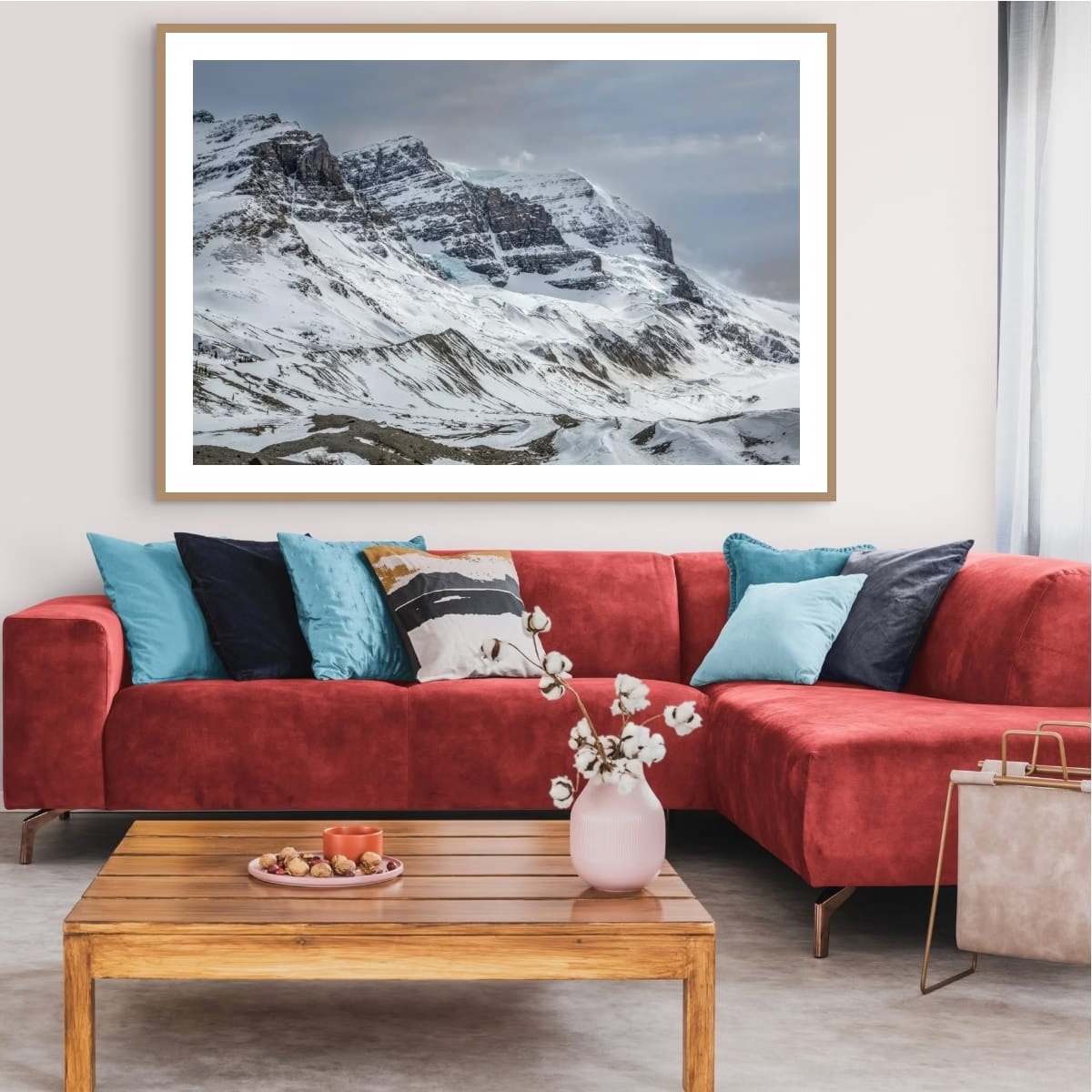
In an age where photography is more accessible and ubiquitous than ever, fine art landscape photography is distinctive as a deliberate, thoughtful, and deeply personal approach to the medium. It is not simply about capturing a scene as it appears, but about using the camera as a tool for artistic expression, where each element is carefully chosen to serve a conceptual vision.
At its core, fine art photography is the intentional use of photography to communicate a specific idea, emotion, or narrative. Unlike documentary or commercial photography, in which often the aim is to serve external purposes, fine art photography is about an artist’s unique interpretation of the world. It goes beyond mere representation, transforming beautiful landscapes into visual poetry that resonates on an emotional level. Fine art landscape photography seeks to touch the viewer’s very soul.
Intention and Vision
One of the defining characteristics of fine art photography is intention. Before pressing the shutter, many photographers have an idea of what they want to communicate. This might be a feeling, a story, or a philosophical concept. The choices of composition, lighting, colour, and even post-processing are all guided by this overarching idea.
Ansel Adams, one of the most influential landscape photographers of the 20th Century, famously spoke about visualization in photography, stating, “You don’t take a photograph, you make it.” His approach emphasized the importance of seeing the final image in the mind’s eye before even clicking the shutter. This concept speaks directly about the intention behind fine art photography—understanding not just what is in front of the lens, but what it can become through creative interpretation.
For me, there is a story in almost everything, and I strive to express that story or at least help other people to see it. I see the timelessness of the landscape and its perfection as part of the ecosystem and the planet, operating over millennia. I see its resilience and how it sustains our lives and the lives of countless species. Seasons come and go, year after year, like the ebb and flow of the tides. The direct seasonal influence on the landscape is drawn from the dynamics of the planet as it travels in space around our sun and our galaxy—it is all connected. This all-encompassing story is a foundational theme and drive behind my landscape photography.
Although I often set out with an intention in mind, I have learned that the landscape always has more to offer than just the plan I had in mind. Quite often, I come home with something completely different than what I expected. It’s important to be open to that— to look around at a location, to allow the landscape to guide me, to surprise me, and to let the creative process unfold organically.
Beyond the Literal
Fine art landscape photography often invites viewers to engage with an image on a deeper level. While a landscape photo taken on a morning hike may be beautiful, a fine art landscape is more than a scene—it’s a perspective, a story, or a statement. It might be a minimalist composition that evokes solitude, a long exposure capturing the passage of time, or an abstract representation of a landscape’s energy.
This is particularly true in the realm of landscape photography. By experimenting with light, motion, or unique perspectives and even abstract techniques, they create images that express something personal—perhaps the fleeting nature of beauty, the power of the natural world, or the interconnectedness of all things.
Process as Part of the Art
The artistic process in fine art landscape photography is as significant as the final image. From conceptualization to execution and editing, each stage involves choices that shape the message and aesthetic. The use of intentional camera movement (ICM), long exposures, or unconventional framing techniques can push an image beyond traditional representation and into the realm of artistic expression.
Post-processing is at least half of my creative process—probably even more. The camera captures the scene and creates the digital data to record it, but post-processing is where the story is truly drawn from the photograph. I often lose track of time when working on an image, and become immersed in refining and highlighting elements of the image to express the story and emotions I wish to convey.
A Personal Connection
Perhaps the most rewarding aspect of landscape photography is the personal connection between the photographer and their work. Because these images are deeply rooted in individual vision and interpretation, they have the power to connect with viewers on a profound level. The best fine art landscape photographs are not just visually striking—they evoke curiosity, emotion, and introspection.
Living, working and travelling in the mountain landscapes of Aotearoa New Zealand and Western Canada for much of my life has offered me countless opportunities to witness the magic and the miracle of the natural world and the sheer beauty of it all. Photography has become a Zen-like creative gift that gives voice to what I feel inside when I am in such places. It heals and reconnects me when I need that, grounding me in the landscapes I love. There are moments when I see it all as a child might, just filled with awe and wonder. I want to try and share that and help others feel that too.
I have come to understand that photography is a journey and that the journey is as fulfilling as the destination. In fact, there is no destination as such. It’s a constant exploration of ideas, techniques, and personal expression. Whether capturing the ethereal glow of a mountain range, the interplay of light and shadow across rolling hills, or the raw power of a stormy coastline, fine art photography is an ongoing dialogue between artist, subject, and audience.
In the end, photography is about much more than just taking pictures—it’s about making art with intention. I am just a messenger trying to convey a message that is so very much bigger than myself. It’s about using the camera not just as a recording device, but as a brush, a chisel, a tool for shaping ideas into visual form. And in doing so, it reminds us that photography is not just about what we see, but also about what we feel, imagine, and dream.
Chris Conway